


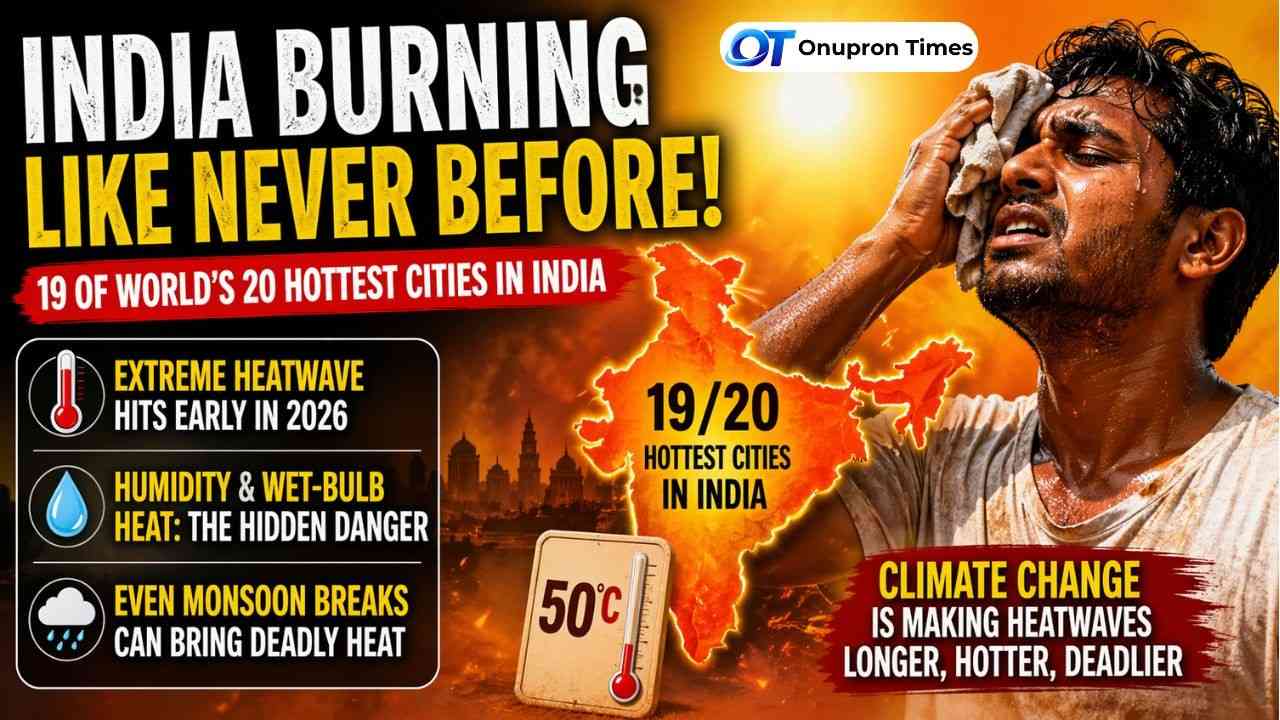
India Heatwave Humidity Risk: According to a warning issued by the India Meteorological Department (IMD), vast regions of East, Central, and Peninsular India are likely to experience heatwaves of longer-than-normal duration between April and June; consequently, people are bracing themselves for a summer that may well set new temperature records. In April 2026, the country became the global epicentre of extreme heat, with 19 of the world’s 20 hottest cities located in India on a single day.
India is facing a severe heatwave in 2026, but humidity could make it more dangerous. Learn how wet-bulb temperature and moist heat increase health risks beyond rising temperatures.
Temperatures in Central India have already made headlines by soaring to between 42 and 45 degrees Celsius; however, there are also certain lesser-known factors that determine how millions of people experience this intense heat in distinct ways.
According to scientists, among these factors, humidity holds particular significance and warrants our special attention.
India Heatwave Humidity Risk: A Nation Heating Up Faster Than Expected
Across central and northern India, temperatures have already crossed dangerous levels well before peak summer. Cities in Maharashtra, Telangana, Uttar Pradesh, and Chhattisgarh are repeatedly appearing on global “hottest places” lists.
This surge is part of a broader pattern. Heatwaves are starting earlier, lasting longer, and affecting more regions than before. Scientists say this is linked to:
- Rising global temperatures
- Reduced soil moisture
- Delayed pre-monsoon rainfall
- Rapid urbanisation
India recorded a sharp rise in heatwave days in recent years, showing that extreme heat is no longer occasional—it is becoming the norm.
The Hidden Danger: Humidity and “Wet-Bulb” Heat
Temperature alone doesn’t tell the full story. What makes the 2026 heatwave especially dangerous is the humidity.
Scientists use a measure called wet-bulb temperature, which combines heat and humidity. When this rises, the human body struggles to cool itself through sweating.
- Coastal regions like Kerala and parts of eastern India are at higher risk
- Even “moderate” temperatures can feel deadly with high humidity
- Long-term data show wet-bulb temperatures are increasing across India’s coasts
In simple terms, this means people may face life-threatening conditions even when the thermometer doesn’t show extreme numbers.
Climate Change Is Driving Stronger Heatwaves
Recent research highlights that climate change is intensifying heatwaves across India.
Key findings include:
- Heatwaves are becoming more frequent and severe
- Urban areas are heating faster than rural surroundings
- Poor air quality can worsen heat-related health risks
At the same time, scientists note a surprising trend:
India’s average warming has been slightly slower than the global average.
This is partly due to:
- Aerosols (air pollution particles) reflecting sunlight
- Irrigation practices cool land surfaces
However, experts warn that this “cooling effect” is temporary and comes with serious environmental and health costs.
India Heatwave Humidity Risk: Heatwaves Are No Longer Just a Summer Problem
Traditionally, the monsoon brought relief from heat. But new research shows a different reality.
During breaks in the monsoon, humid heatwaves can become even more dangerous:
- Moist air traps heat in the body
- The risk of heat stress increases sharply
- These events can now be predicted weeks in advance
In fact, one study suggests that certain monsoon patterns can increase the chance of such heatwaves by over 100%.
Why Cities Are Hit the Hardest
Urban areas are particularly vulnerable due to:
- Concrete structures absorb and trap heat
- Lack of green cover
- High population density
- Poor ventilation in crowded areas
This creates the “urban heat island” effect, where cities remain hotter than nearby rural regions—even at night.
Related Article: Kerala Lottery Result Today April 19, 2026 | Download PDF, Samrudhi SM-51 Winners Announced, 1 Crore First Prize Declared
India Heatwave Humidity Risk: What This Means for People
The impact of rising heat is already visible:
- Increased cases of heatstroke
- Pressure on the electricity and water supply
- Higher health risks for outdoor workers and vulnerable groups
Experts warn that without proper adaptation, heatwaves could become one of India’s biggest public health challenges.
What Needs to Change Now
India is not powerless against this crisis. Several measures can reduce the impact:
- Expanding green cover in cities
- Better urban planning and ventilation
- Early warning systems for heatwaves
- Public awareness of hydration and heat safety
- Climate-resilient infrastructure
Know More: https://en.wikipedia.org/wiki/List_of_Indian_heat_waves
