


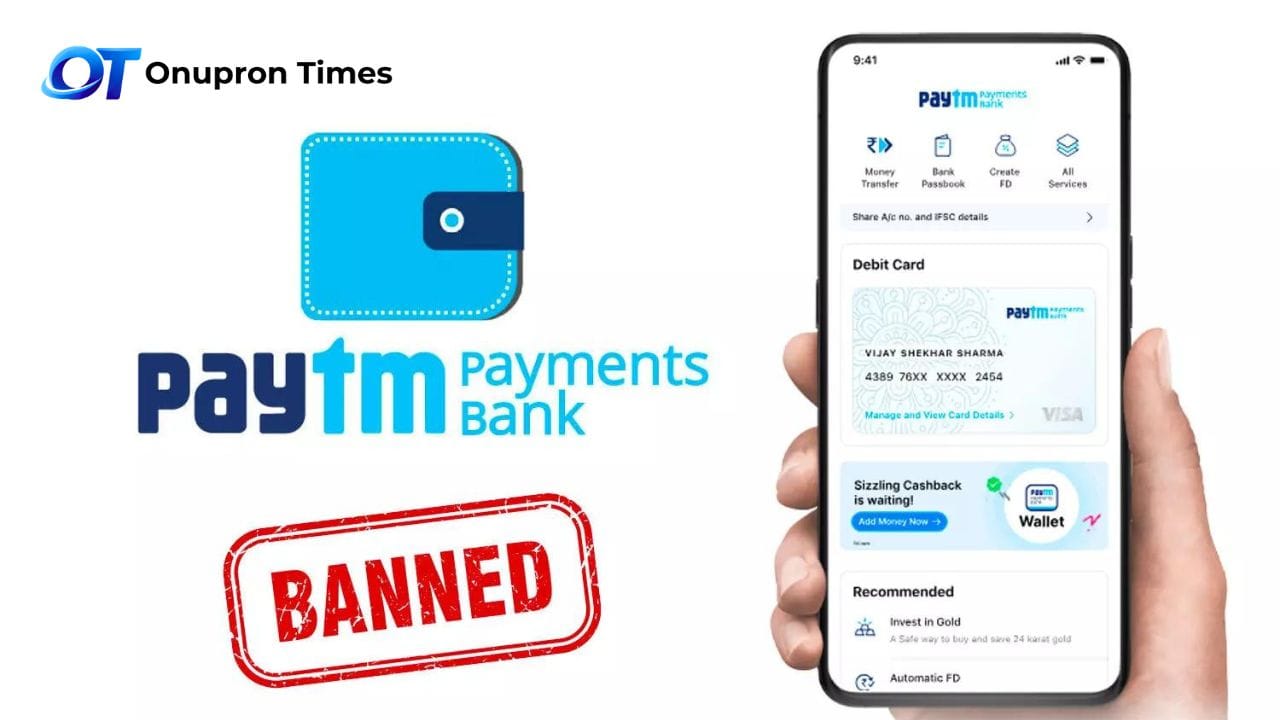
Paytm Licence Cancelled: In a major development for India’s fintech and banking sector, the Reserve Bank of India (RBI) has cancelled the banking licence of Paytm Payments Bank with immediate effect on April 24, 2026. The decision marks one of the strongest regulatory actions taken against a digital banking entity in recent years.
What Exactly Happened?
The RBI revoked the licence under the Banking Regulation Act, 1949, effectively ending all banking operations of Paytm Payments Bank. The regulator will now move to the High Court to initiate the winding-up process of the bank.
This means:
- The bank can no longer operate as a banking institution
- It is barred from accepting deposits or offering banking services
- Legal steps will be taken to formally shut down operations
Related Article: SSC Stenographer 2026 Notification Out: Apply Now, Exam Date, Syllabus & Full Details
Reasons for Cancellation
| Issue | Explanation |
|---|---|
| KYC Violations | Weak customer verification processes |
| Compliance Failures | Repeated non-compliance despite warnings |
| Governance Issues | Poor internal controls and risk management |
| IT & Security Concerns | Gaps in technology systems and monitoring |
| Public Interest Risk | Operations deemed unsafe for depositors |
Official RBI Notification (Confirmed Details)
- The Reserve Bank of India issued a notification dated April 24, 2026 stating that:
- The licence of Paytm Payments Bank is cancelled with effect from close of business on April 24, 2026
- The bank is barred from carrying out banking operations
- RBI will approach the High Court for winding up
These reports are based directly on the RBI press release/notification.
Why Did RBI Cancel the Licence?
The cancellation did not come suddenly. It followed years of regulatory concerns and restrictions. Key reasons include:
1. Serious Compliance Failures
RBI flagged persistent violations of banking norms, especially:
- Weak customer verification (KYC failures)
- Poor due diligence processes
2. Mismanagement of Operations
The regulator concluded that the bank’s affairs were being conducted in a manner “detrimental to depositors and public interest.”
3. Technology and Governance Issues
There were serious gaps in IT systems and risk controls, raising concerns about data safety and financial integrity.
4. Continued Non-Compliance Despite Warnings
- RBI had already banned new deposits in 2024
- Multiple warnings and deadlines were ignored or inadequately addressed
Background: What is Paytm Payments Bank?
Paytm launched its payments bank arm as part of India’s push toward digital banking.
- Founded: 2017
- Type: Payments bank (can accept deposits but cannot lend)
- Owned by: One97 Communications & Vijay Shekhar Sharma
Payments banks were designed to promote financial inclusion, but they operate under strict regulatory limits.
What Happens to Customers’ Money?
There is some reassurance for customers:
- RBI has stated the bank has enough liquidity to repay depositors
- Customers will be able to withdraw their money during the winding-up process
However:
- No new transactions or banking services will be allowed
- Customers may need to shift to other banks or payment apps
Impact on Paytm and the Fintech Sector
1. Limited Direct Impact on Paytm
Parent company Paytm clarified that:
- The payments bank is a separate entity
- The licence cancellation has no major financial impact on core business
2. Big Signal for Fintech Companies
This move sends a strong message:
- Compliance is non-negotiable
- Even large fintech players are not immune to strict regulation
3. Trust and Regulation Tightening
The RBI is likely to:
- Increase scrutiny of digital banks and wallets
- Strengthen KYC and anti-money laundering rules
Timeline of Key Events
- 2017 – Paytm Payments Bank launched
- 2022–2024 – RBI flags compliance issues
- Jan 2024 – Ban on new deposits
- 2025 – Operations significantly restricted
- April 24, 2026 – Licence officially cancelled
What Should Users Do Now?
If you are a Paytm Payments Bank user:
- Withdraw or transfer your balance
- Link your Paytm wallet to another bank
- Avoid keeping funds in inactive accounts
- Monitor official RBI or Paytm updates
The RBI’s decision to cancel Paytm Payments Bank’s licence is a landmark moment in India’s digital finance ecosystem. It highlights a simple but critical point:
Even in a fast-growing fintech market, regulatory compliance is as important as innovation.
This case will likely reshape how digital banking platforms operate in India going forward, with stricter oversight and higher accountability.
