


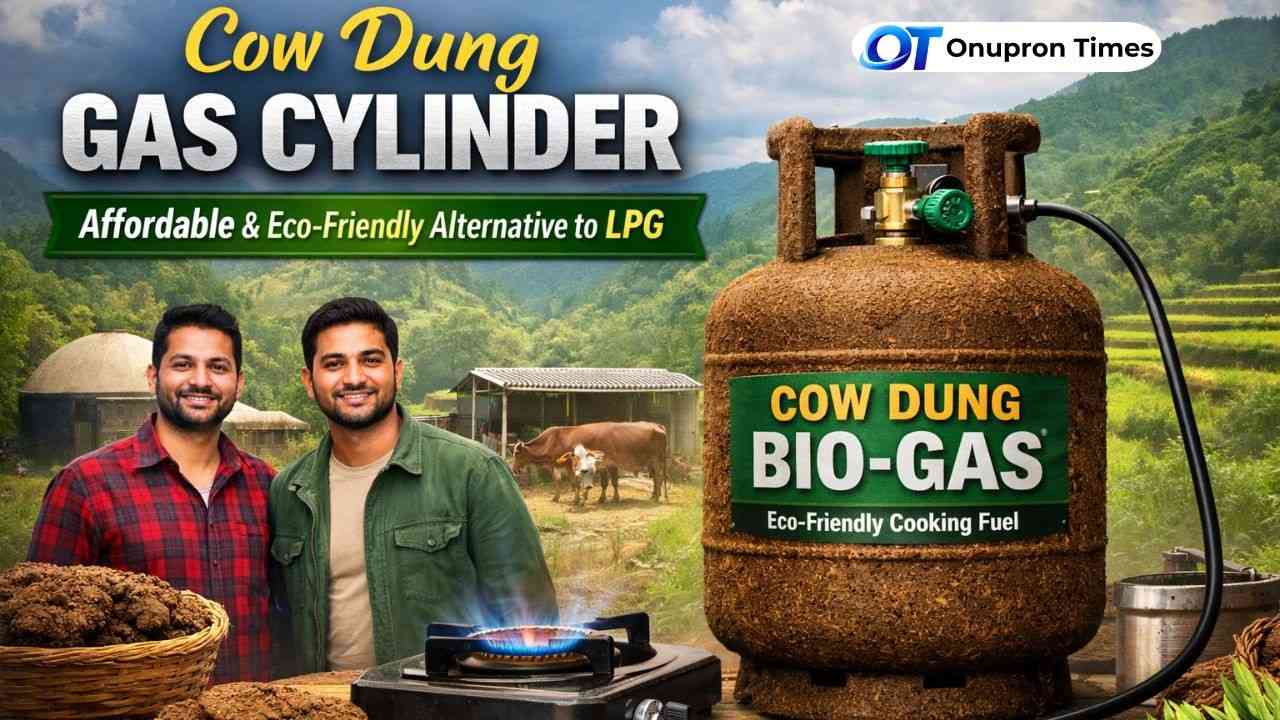
Cow Dung Gas Cylinder Innovation from Uttarakhand: Two brothers from Uttarakhand have invented an innovative gas cylinder made from cow dung, which could serve as a sustainable alternative to conventional LPG. Their concept brilliantly integrates rural resources with modern energy requirements.
Reportedly, this cylinder supplies approximately 18 kg of gas for just ₹500—a cost significantly lower than that of conventional cooking gas. This affordability could prove immensely beneficial for low-income families residing in rural and semi-urban areas.
This eco-friendly solution utilizes biogas derived from cow dung, thereby helping to reduce dependence on fossil fuels. Furthermore, it promotes the use of clean energy through the efficient utilization of agricultural waste.
This initiative has currently garnered significant attention online; videos highlighting the product as a viable alternative amidst rising LPG prices and supply shortages are now going viral across social media platforms.
If scaled up appropriately, this innovation could contribute to achieving sustainable energy goals, mitigate negative environmental impacts, and create new income opportunities for rural communities involved in biogas production.
A Simple Idea with Big Impact
The concept is rooted in a familiar rural resource: cow dung. By converting it into biogas, the brothers have created a system that can store and supply fuel in a cylinder-like format. What makes this innovation stand out is its affordability.
According to early reports, the cylinder can deliver around 18 kg of gas for approximately ₹500. This is significantly lower than the cost of a standard LPG refill, making it especially attractive for low-income households.
Cow Dung Gas Cylinder Innovation: How It Works
The process involves collecting cow dung and feeding it into a biogas plant, where it decomposes in an oxygen-free environment. This produces methane-rich gas, which is then purified and stored for cooking use.
Unlike traditional firewood or coal, biogas burns cleanly, producing less smoke and reducing indoor air pollution. The leftover slurry from the process can also be used as an organic fertilizer, adding another layer of value for rural users.
Why This Matters Now
With rising LPG prices and occasional supply challenges in remote areas, alternatives like this are becoming increasingly relevant. Rural households often rely on inconsistent or polluting fuel sources. This cow dung-based gas cylinder offers a cleaner and more reliable option.
It also aligns with India’s broader push toward sustainable energy and waste management. By turning agricultural waste into fuel, the model addresses two challenges at once: energy access and waste utilization.
Social Media Buzz and Public Interest
The innovation has gained traction online, with videos of the cylinder going viral across platforms. Many users are calling it a “game changer” for rural India, while others see it as a scalable solution that could reduce dependence on fossil fuels.
This growing visibility is helping bring attention to small-scale innovations that often remain limited to local communities.
Cow Dung Gas Cylinder Innovation: Challenges and the Road Ahead
While the idea is promising, scaling it up will require proper infrastructure, safety standards, and distribution networks. Ensuring consistent gas quality and storage safety will be key factors in gaining public trust.
Support from government agencies or private investors could help expand this initiative to a larger audience. Training rural communities to set up and maintain biogas units could also generate employment and additional income streams.
A Step Toward Sustainable Living
This Uttarakhand-based innovation highlights how local solutions can address national challenges. By combining traditional resources with modern needs, the cow dung gas cylinder represents a step toward cleaner, cheaper, and more sustainable energy.
If developed and scaled effectively, it could reshape how rural India approaches cooking fuel, while also contributing to environmental conservation and economic resilience.
Related Article: https://onuprontimes.com/latest-news/india-news/
Know More: https://en.wikipedia.org/wiki/Uttarakhand
