


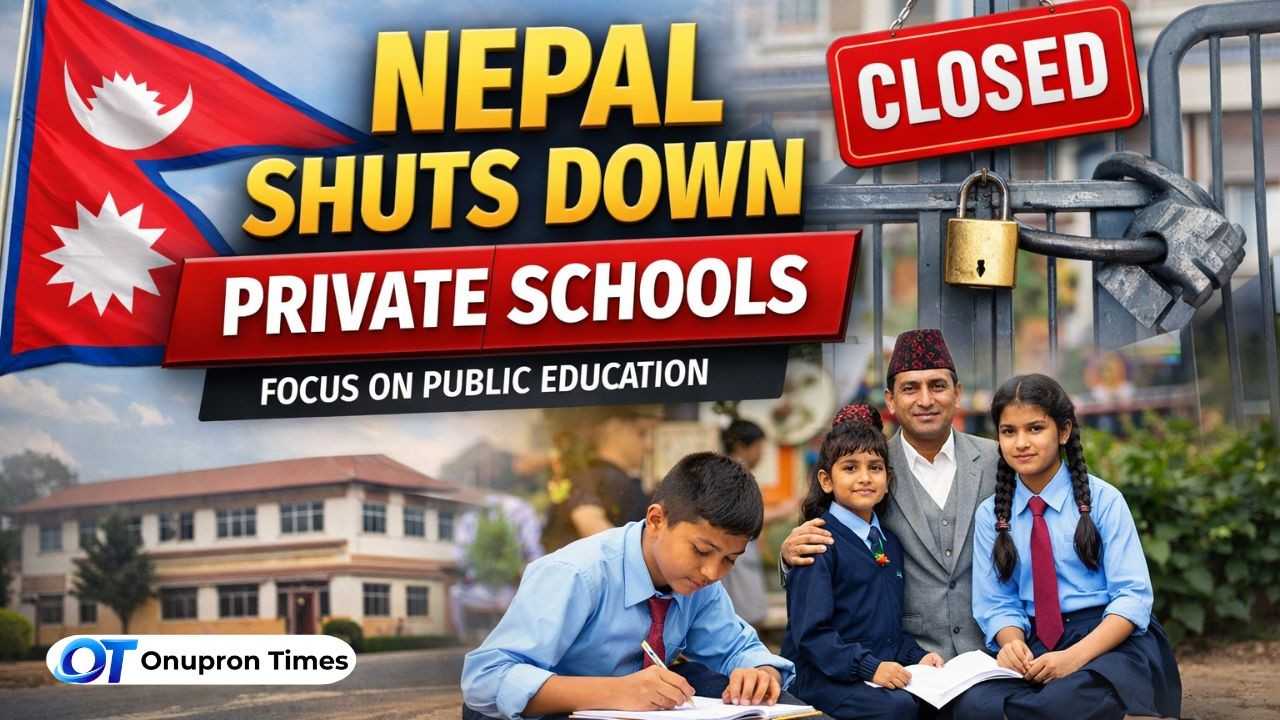
Nepal Closes Private Schools: The government of Nepal has taken a strong step that many people think others can learn from. To improve the quality of government schools, it has focused more on public education and taken action against private schools. It is also being said that children of ministers and well-known people will study in government schools, so that the system improves for everyone.
Why Private Schools Were Closed
The controversy began after authorities stepped in to enforce new regulations tied to the academic calendar and institutional compliance. Officials raised concerns that several private schools were not adhering to standardized guidelines, particularly regarding admission processes, fee structures, and academic scheduling.
The action is being viewed as part of a broader effort by the government to bring uniformity and accountability to the education system.
Role of Sasmita’s Initiative
The recent developments are linked to policy enforcement reportedly driven by education authorities, including actions associated with reform initiatives often attributed to officials like Sasmita. The focus has been on tightening oversight of private institutions, which have long operated with a degree of autonomy.
This sudden enforcement has created a ripple effect across the country, especially in urban areas where private schooling dominates.
Impact on Students and Parents in Nepal: Closure of Private Schools
The closure of private schools has left thousands of students in limbo. Many parents have expressed concern over:
- Disruption of ongoing academic sessions
- Uncertainty regarding examinations and results
- Lack of clarity on reopening timelines
Students preparing for crucial exams are among the most affected, as academic continuity remains uncertain.
Private Schools Push Back
Private school operators have strongly opposed the move, arguing that:
- The decision was implemented without adequate consultation
- Sudden closures disrupt both teaching and administrative planning
- The private sector plays a key role in Nepal’s education system
Some institutions have called for dialogue with the government to find a balanced solution.
Government’s Stand
Authorities maintain that the action is necessary to ensure fairness and standardization. Officials argue that:
- Regulations are essential to protect students’ interests
- Fee transparency and academic discipline must be enforced
- All institutions must follow national education policies
The government has indicated that schools complying with the rules may be allowed to resume operations.
What Happens Next
The situation remains fluid, with discussions likely between government representatives and private school associations in the coming days. The outcome will be crucial in determining:
- When will schools reopen
- Whether new regulations will be revised
- How future academic calendars will be structured
Bigger Picture
This episode highlights a larger issue within Nepal’s education system — the ongoing tension between regulation and institutional autonomy. While the government aims to standardize education, private institutions seek operational flexibility.
The coming weeks will be critical in shaping the future of private education in Nepal.
